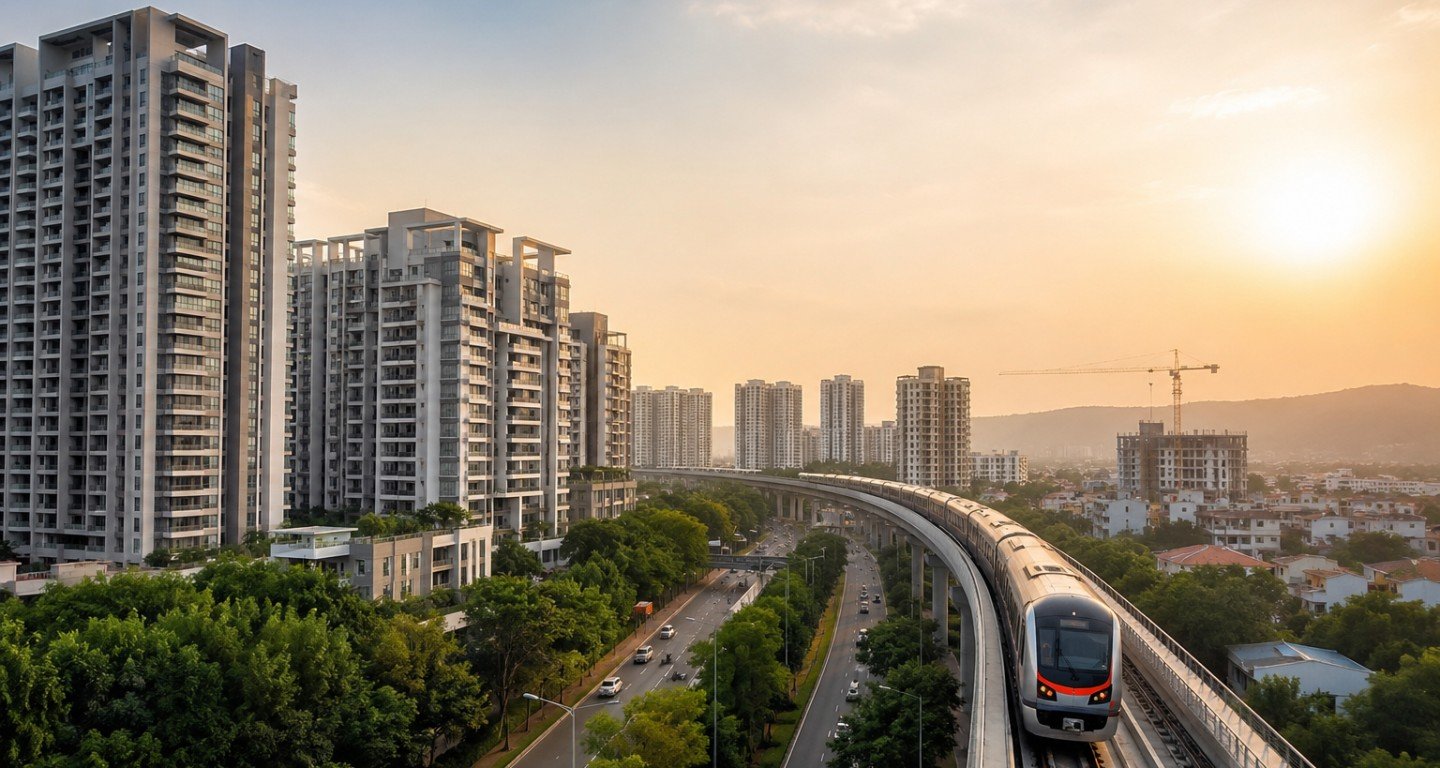
Ask any homeowner what they love most about their home and the answers may vary. Some will mention spacious layouts while others will talk about amenities or scenic views. But ask them what makes everyday life easier and one answer almost always stands out. It is the location.
A beautiful home can always be upgraded over time. However, its location never changes. This is why the Importance of Connectivity in Real Estate continues to shape buying decisions across every stage of a property’s lifecycle. Whether you are purchasing your first home or investing for future returns, choosing a well-connected location can influence convenience, appreciation and long-term satisfaction.
Why Connectivity Matters More Than Ever
Modern lifestyles demand faster commutes, better accessibility and easy access to everyday essentials. People no longer want to spend hours travelling between work, schools, hospitals and entertainment hubs.
Strong Real Estate Connectivity helps residents save valuable time every day while improving their overall quality of life.
A well-connected neighbourhood typically offers easy access to:
- Major highways and arterial roads
- Metro stations and public transport
- Schools and colleges
- Hospitals and healthcare facilities
- IT parks and business districts
- Shopping centres and entertainment zones
These conveniences make daily living smoother while increasing the desirability of the location.
Why Connectivity is Important in Real Estate
Many buyers often ask why connectivity is important in real estate before making a purchase.
The answer is simple. Better accessibility enhances both lifestyle and investment potential. A home located close to essential infrastructure reduces travel time and creates greater convenience for residents.
Properties in strategically connected locations also tend to attract higher demand from both homebuyers and tenants, making them valuable assets over the long term.
Connectivity and Property Value
One of the strongest relationships in real estate is between Connectivity and Property Value.
As new roads, metro corridors, flyovers and commercial developments improve accessibility, nearby residential projects often witness steady appreciation.
Several factors contribute to this growth:
- Increased buyer demand
- Better rental opportunities
- Improved commercial activity
- Stronger social infrastructure
- Enhanced long-term investment confidence
This explains how connectivity affects property value across both developing and established residential markets.
Connectivity and Infrastructure Go Hand in Hand
Successful cities are built around efficient infrastructure. Roads, transport systems and civic amenities create the foundation for sustainable urban growth.
The relationship between Connectivity and Infrastructure becomes stronger as governments continue investing in better transportation networks.
Improved infrastructure supports:
- Faster commuting
- Better business growth
- Higher employment opportunities
- Improved public services
- Greater residential demand
These developments often become major drivers of real estate appreciation over time.
Accessibility Creates Better Everyday Living
One important aspect of buying a home is Accessibility in Real Estate.
Accessibility is not only about reaching your workplace quickly. It also means having schools, hospitals, supermarkets and recreational spaces within easy reach.
Families especially benefit from homes located close to everyday conveniences because they spend less time travelling and more time enjoying quality moments together.
Before purchasing a home, buyers should evaluate:
- Daily commute duration
- Nearby educational institutions
- Healthcare accessibility
- Public transport options
- Future infrastructure projects
These practical factors contribute significantly to long-term satisfaction.
Transportation Connectivity Drives Future Growth
Strong Transportation Connectivity often becomes the backbone of successful residential destinations.
Metro rail networks, ring roads, highways and public transport systems improve mobility while encouraging commercial and residential development.
Many of today’s fastest-growing neighbourhoods achieved their popularity after transportation networks improved significantly.
This is one of the biggest reasons why infrastructure impacts on real estate growth continue to be a key consideration for investors.
Urban Connectivity Supports Long-Term Appreciation
Modern cities thrive on seamless movement between residential, commercial and recreational zones.
Good Urban Connectivity creates balanced communities where residents can access work, education and leisure without long travel times.
Developments located in strategically connected urban corridors often experience sustained buyer demand, leading to healthier appreciation over the years.
The Strategic Location Advantage
Every successful real estate investment begins with choosing the right location. The Strategic Location Advantage lies in selecting a neighbourhood that offers both present convenience and future growth potential.
When evaluating a property, ask yourself:
- Is the location well connected today?
- Are major infrastructure projects planned nearby?
- Will accessibility improve over the next few years?
- Does the area offer strong social infrastructure?
Positive answers to these questions often indicate a promising long-term investment.
Projects developed by Platinum Group are thoughtfully located to offer residents excellent connectivity, everyday convenience and access to growing urban infrastructure. This enables homeowners to enjoy a balanced lifestyle while benefiting from the area’s future development.
Conclusion
A home’s design and amenities certainly enhance the living experience, but location remains the foundation of long-term value. Excellent connectivity saves time, improves convenience and strengthens investment potential for years to come.
If you are searching for thoughtfully located residential developments that combine comfort with excellent accessibility, explore Platinum Group’s premium projects by visiting Platinum Group and discover homes designed for today’s lifestyle and tomorrow’s growth.
FAQs
1. How does connectivity affect property value?
Better connectivity increases buyer demand and supports long-term property appreciation.
2. Does connectivity increase property prices?
Yes, well-connected locations generally experience stronger price growth over time.
3. How does infrastructure impact real estate growth?
Infrastructure improves accessibility and attracts residential and commercial development.
4. What factors make a property location valuable?
Good connectivity, social infrastructure and future development potential make a location valuable.
5. Why do well-connected properties appreciate faster?
They remain in higher demand because they offer greater convenience and better accessibility.
Recent Blog

West-Facing Flat Vastu: Layout Tips for Positive Energy


How PCMC’s Growth Is Transforming Moshi into a Prime Residential Hub
-
How Upcoming Infrastructure Projects Are Driving Property Growth in Moshi
-
Why Location Matters: The Advantages of Buying a Home in Moshi